

Learning how to apply vinyl wall stickers properly makes all the difference. Most people just rush it — and that’s where things go wrong. That’s why they end up with bubbles, crooked designs, or edges that don’t sit flat.
If you’re trying to apply vinyl wall stickers without bubbles, the process matters more than the design itself. If you slow down and apply it properly, the result looks clean. Almost like it was part of the wall from the start.
Before you start, it helps to understand what vinyl wall stickers are and how they work — because the material itself affects how you apply it.
Watch How It’s Done
If you want to see how to apply vinyl wall stickers without bubbles, watch the full process in action.
👉 Watch how to apply vinyl wall stickers
- Why Application Matters More Than the Sticker
- What You Need (Nothing Complicated)
- How to Apply Vinyl Wall Stickers Step-by-Step
- How to Apply Large Vinyl Wall Stickers (Feature Walls)
- Can You Apply Vinyl Wall Stickers on Textured Walls?
- Do Vinyl Wall Stickers Damage Walls?
- Common Mistakes (Avoid These and You’ll Be Fine)
- Where Vinyl Wall Stickers Work Best
- Final Thoughts
Why Application Matters More Than the Sticker
People focus too much on the design.
But the finish depends on how you apply it.
You can have a great design, but rush the application and it shows:
- air gets trapped
- edges don’t sit flat
- it looks like a sticker
Done properly:
- it blends into the wall
- it looks intentional
- it becomes a feature
👉 The difference isn’t the design. It’s how it’s applied. These small details are what separate a clean finish from a rushed job when applying wall decals smoothly.
What You Need (Nothing Complicated)
You don’t need special tools.
You only need a few basic things:
- a clean dry cloth
- a slightly damp cloth
- a plastic card (a bank card works fine)
- masking tape
- a pencil (optional)
👉 Most mistakes aren’t about tools. They’re about rushing the process.
How to Apply Vinyl Wall Stickers Step-by-Step
Step 1: Prepare the Wall for Vinyl Wall Stickers
If the wall isn’t right, nothing else matters.
Your wall should be:
- clean
- dry
- smooth
- fully painted and cured
If there’s dust or grease, the sticker won’t grip properly.
If the paint is fresh, it can lift when you remove the sticker later.
👉 If the wall isn’t ready, don’t apply anything yet.
Step 2: Position Vinyl Wall Stickers Correctly
When learning how to apply vinyl wall stickers, positioning matters just as much as the application itself. Don’t peel anything yet. Hold the sticker up and check:
- height
- spacing
- alignment with furniture
Use masking tape to hold it in place.
Step back and look at it properly.
👉 If it looks slightly off now, it will look worse once it’s applied.
Step 3: Apply Vinyl Wall Stickers Without Bubbles
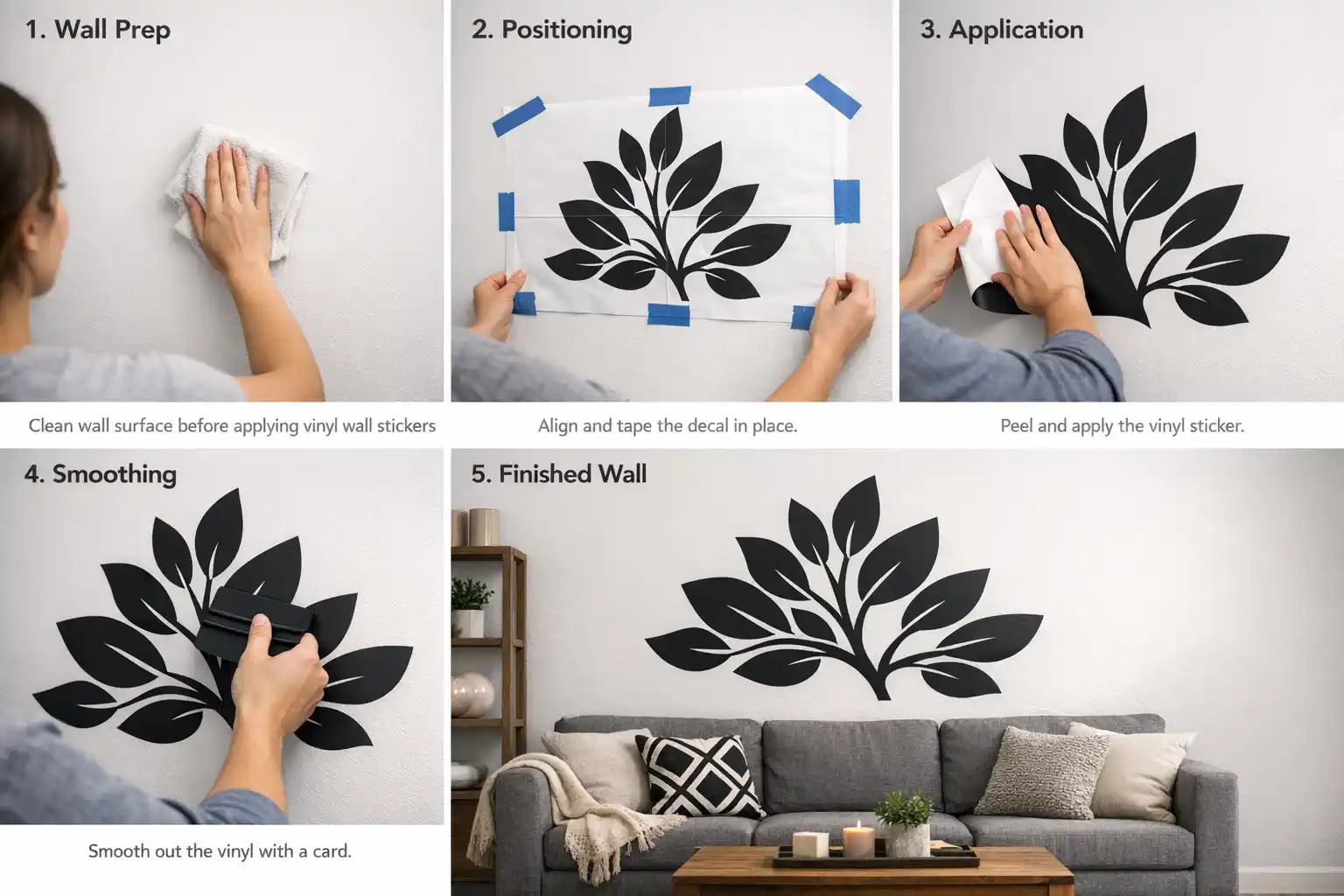
This is the step that determines whether you apply vinyl wall stickers without bubbles or end up fixing mistakes later.
Peel a small section of the backing first, then press that part onto the wall.
Then:
- peel a little more
- smooth it down
- repeat
👉 This is where most people mess it up — they try to apply everything at once.
👉 The slower you go, the better it looks. Every time. These small changes make a noticeable difference in the final result.
Step 4: Smooth Vinyl Wall Stickers for a Clean Finish
This is what actually prevents bubbles. Most people press from one side — that’s the mistake. This is the most effective way to avoid bubbles in wall stickers.
Always:
- press from the middle
- push outward
Use a card wrapped in a cloth. It gives you control without scratching the vinyl.
Step 5: Fix Bubbles in Vinyl Wall Stickers
Small bubbles are easy to fix early, but much harder once the vinyl has settled.
If you’re unsure how to put wall stickers on wall surfaces evenly, working in sections makes it much easier.
How to Apply Large Vinyl Wall Stickers (Feature Walls)
Large designs need more care because mistakes are more obvious.
For bigger stickers:
- measure properly
- align with the sofa or bed
- work in sections
- don’t rush
👉 If it’s wide, get someone to help.
Trying to handle a large piece alone is where things usually go wrong.
If you’re still choosing a design for a larger space, it helps to start with the wall stickers collection to see what works best at scale.
Can You Apply Vinyl Wall Stickers on Textured Walls?
Short answer: sometimes.
Real answer:
👉 smooth walls always work better.
Light texture might be okay.
Heavy texture:
- breaks contact
- lifts edges
- ruins the finish
👉 If you’re unsure, test a small section first. It will tell you everything you need to know.
If you’re deciding which room to use, it’s worth understanding where to use vinyl wall stickers before choosing your wall.
Do Vinyl Wall Stickers Damage Walls?
Not if you do it properly.
But the wall matters more than the sticker.
To reduce risk:
- apply to cured paint only
- avoid weak or flaky surfaces
- remove slowly later
👉 If the paint is poor, anything will pull it off. Not just stickers.
If you’re unsure about this, read the full guide to vinyl wall stickers to understand how the material works.
Common Mistakes (Avoid These and You’ll Be Fine)
Most issues come from the same mistakes:
- applying to fresh paint
- skipping wall cleaning
- not checking placement
- rushing large designs
- peeling everything at once
👉 Avoid these, and you’ll already be ahead of most people.
Where Vinyl Wall Stickers Work Best
You’ll get the best result on clean, flat walls in:
- living rooms (above sofas)
- bedrooms (above headboards)
- hallways
- offices
- dining areas
👉 These are the spaces where a single design can actually anchor the room.
If you’re looking for ideas, start with the wall stickers collection, or browse bedroom wall stickers and kitchen wall stickers for more room-specific designs.
Final Thoughts
Once you understand how to apply vinyl wall stickers properly, the whole process becomes straightforward.
It just isn’t something you rush. Most problems don’t come from the sticker. They come from how it’s applied.
If you take your time:
- the finish is clean
- the design sits properly
- the wall finally feels finished
👉 That’s the difference between something that looks stuck on — and something that looks designed.